
Your Gas Detection Guide for Safe Working in Confined Spaces
Confined space work is controlled through planning, documented procedures, and defined responsibilities. Entry decisions are made before conditions can be seen or corrected, and once work begins, the margin for error narrows rapidly. Incidents in these environments are more often caused by unverified assumptions than by gaps in guidance. Gas detection exists to provide objective data on conditions that cannot be directly observed, helping personnel retain situational awareness and support safe working in confined spaces where change may occur without warning.
Identifying atmospheric hazards and their risks
Hazardous atmospheres in confined spaces can form when gases displace air, accumulate, or stratify beyond human perception. Such changes may occur gradually over time or arise suddenly due to work activity, ventilation shifts, or process conditions. Consequently, a space that appears stable can contain multiple overlapping hazards, each presenting a different safety concern.
Oxygen displacement
As oxygen depletion is invisible and odourless, it presents one of the most immediate confined space dangers. Oxygen deficiency occurs when air is displaced by inert gases or oxygen is consumed through corrosion, oxidation, or biological activity. Once oxygen concentrations fall below 19.5%, reduced oxygen availability quickly impairs coordination and cognitive function, increasing the risk of accidents, particularly during movement, equipment handling, or emergency response.
Toxic gas accumulation
Toxic gases often originate from process materials, waste breakdown, or nearby activities. They include:
Hydrogen sulphide (H₂S)- common in wastewater and organic decay. It is highly toxic and can dull the sense of smell at low concentrations, causing odour to become an unreliable indicator of exposure.
Carbon monoxide (CO)- produced by incomplete combustion and may migrate into confined spaces from engines, heaters, or hot work. It prevents oxygen from being transported effectively in the body, which can lead to tissue hypoxia and loss of consciousness.
Flammable atmospheres and gas behaviour
Flammable gases such as methane become hazardous when concentrations reach the lower explosive limit, the minimum concentration at which ignition is possible. In confined spaces, limited ventilation allows these gases to accumulate rather than disperse. Differences in gas density determine where ignition risk develops, with lighter gases collecting at higher levels and heavier gasses settling lower. As a result, a space may contain flammable zones even when other areas appear safe.
Essential gas detection equipment
Different gas detection instruments support the phases of confined space entry and occupancy, from remote atmospheric testing to continuous personal protection.
Pumped multi-gas detectors
Pumped multi-gas detectors are used to assess atmospheric conditions before entry. By drawing air through a sampling hose, they allow remote testing at multiple depths without exposing personnel. This capability is critical where gases may stratify, since conditions can vary within the same space. Pre-entry sampling provides the information needed to determine whether entry can proceed safely and what controls, such as ventilation or respiratory protection, may be necessary.
Personal wearable monitors
Personal wearable monitors provide protection once personnel enter a confined space. Worn at the breathing zone, they continuously track atmospheric conditions and alert the wearer to changes caused by movement, cleaning, or process disturbance, ensuring evolving hazards are detected even after acceptable pre-entry results.
How to work safely: integrating gas detection into confined space procedures
Gas detection supports safe confined space work through providing ongoing awareness of atmospheric conditions before and during entry. Applying detection at both stages allows personnel to respond quickly to change and manage entry, occupancy, and exit under controlled conditions.
Pre-entry testing and ventilation
Before anyone enters the confined space, gas detection is used to establish whether the task can begin safely. Pumped detectors draw air from different heights to reflect how gases behave inside the space, not just at the opening. The readings taken at this stage determine whether work proceeds, is delayed, or requires ventilation. When ventilation is applied, gas detection is used again to confirm that the atmosphere has been stabilised before entry takes place.
Continuous monitoring and role control
Once personnel are inside the confined space, gas detection remains active and directly shapes how work is carried out. Wearable monitors track the atmosphere at the breathing zone as the task progresses, responding immediately to changes caused by movement, cleaning, or process disturbance. This real-time feedback allows entrants to stop or withdraw without delay, while an attendant outside the confined space follows detector status, maintains communication, and prepares to act if conditions change.
Alarm response
The alarm from a gas detector indicates that atmospheric conditions have moved outside acceptable limits for safe working. If the alarm sounds, personnel exit the confined space immediately, using the detector signal as the trigger rather than attempting to assess the situation from inside the space. After withdrawal, gas detection is used externally to reassess atmospheric conditions and confirm whether controls like ventilation have made the space safe for re-entry.
Gas detection solutions from Senko Europe
Senko Europe provides ATEX-certified gas detection solutions designed for confined space work, including applications such as tank entry, sewer access, pipeline inspection, and tasks within silos and service pits across industrial sites.
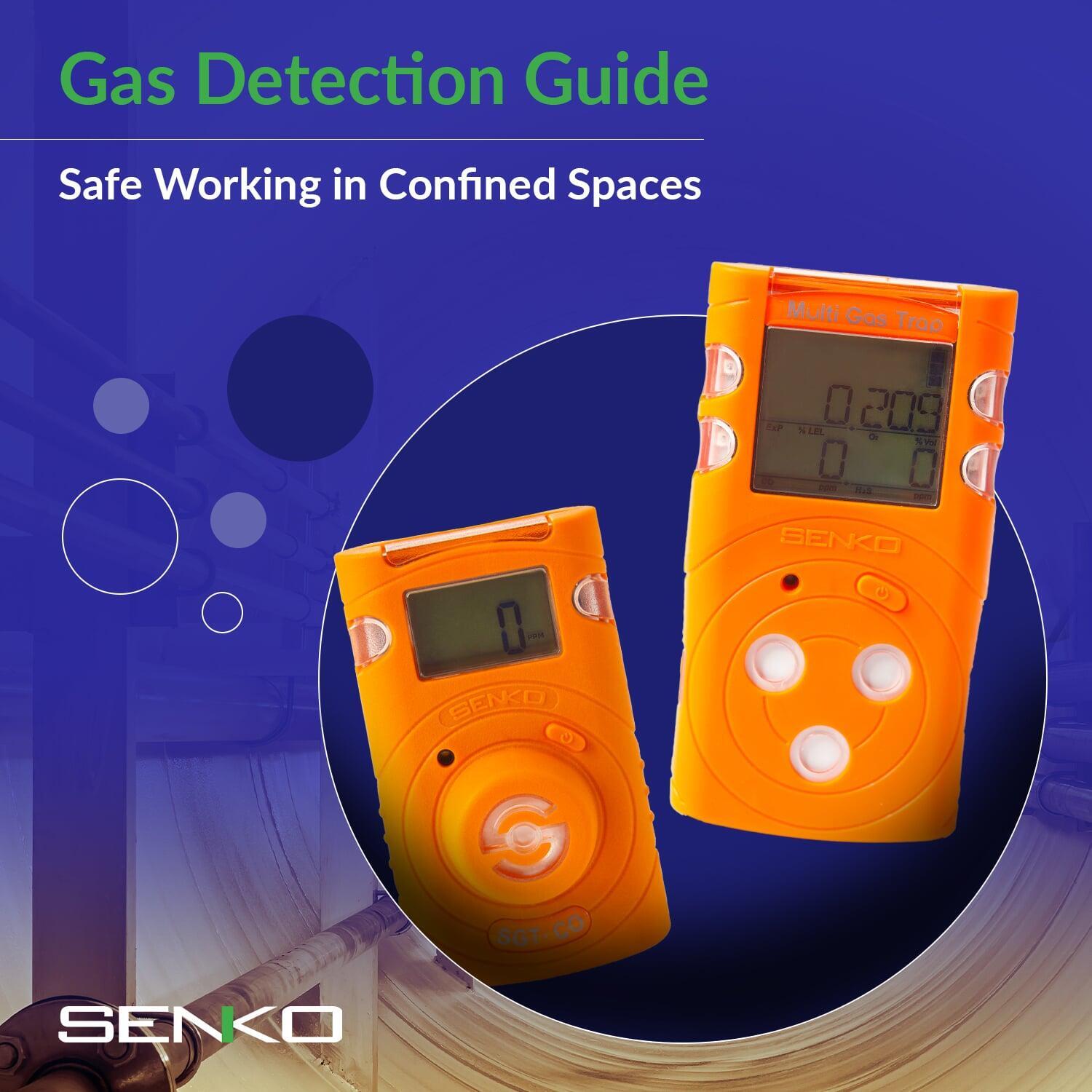
MGT Series multi-gas detectors - provide portable four-gas monitoring as standard, with the pumped version capable of monitoring up to six gases. The pump model also enables remote pre-entry sampling, supporting atmospheric checks at multiple depths where gas stratification may occur. Moreover, clear audible, visual, and vibration alarms ensure effective warning in demanding site conditions, including confined maintenance duties, enclosed plant areas, and environments with high background noise or limited visibility.
SGT Series single-gas monitors - engineered for maintenance free continuous monitoring of singular gas hazards such as hydrogen sulphide, carbon monoxide, or oxygen deficiency in confined and enclosed work areas.
Strengthening Confined Space Safety with Gas Detection
Embedding gas detection into confined space work allows atmospheric risk to be identified, monitored, and controlled throughout the task lifecycle. It provides objective information that can mitigate invisible risks in environments where conditions can change rapidly and consequences are severe. With the gas detection solutions from Senko Europe, organisations can ensure personnel are supported by clear, reliable detection throughout confined space tasks. For more information about our available products for gas detection, contact our specialists.