
Why choose a VOC Gas Monitor that can measure Benzene?
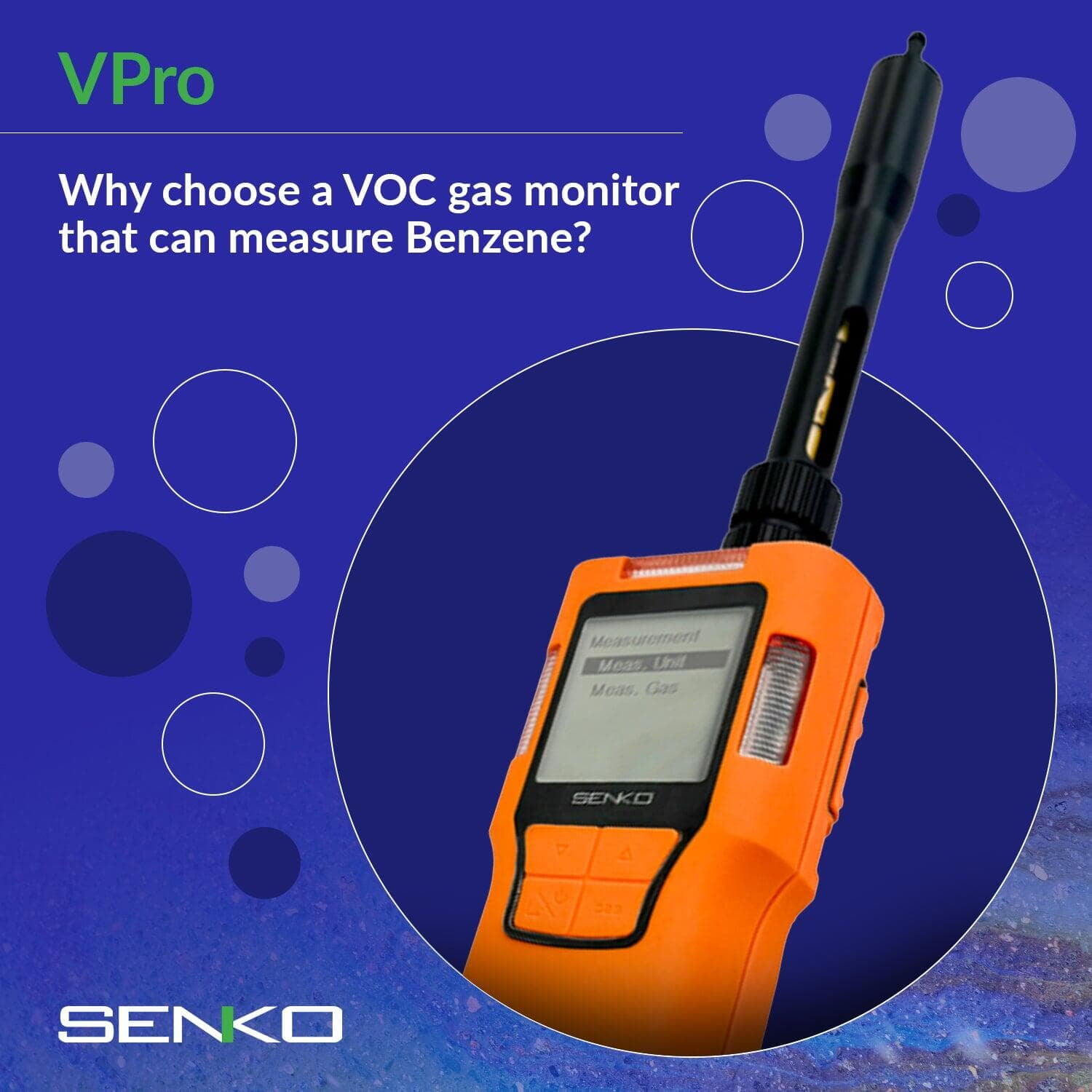
Not all volatile organic compounds present the same level of risk. In industrial and environmental monitoring, benzene stands apart as a compound that demands specific attention. While total VOC measurements describe overall hydrocarbon presence, they do not differentiate between compounds with vastly different toxicological profiles. Benzene stands out due to its classification as a human carcinogen and its disproportionate contribution to health risk.
For technical teams responsible for confined space entry, contamination assessment, or ongoing site monitoring for a site with a benzene hazard, choosing a VOC gas monitor that can isolate and measure benzene is strategically crucial. One that directly affects how risk is identified, classified, and controlled.
Benzene as a critical indicator compound
Benzene is not measured simply as a general indicator of hydrocarbon contamination. Instead, it is specifically targeted because it presents the highest toxicological risk within many hydrocarbon mixtures.
Petroleum risk assessment
Petroleum products are complex mixtures of hydrocarbons with varying toxicological profiles. As mentioned, benzene is a known human carcinogen, and its presence is prioritised in risk assessment because it represents one of the most hazardous components within petroleum-derived mixtures. When benzene is detected, it signals that more serious health considerations may be present, even if overall VOC levels appear modest. Detecting benzene does not act as a proxy for all hydrocarbons; rather, it highlights the presence of a compound with well-established carcinogenic risk, which may drive stricter exposure controls even when total VOC levels appear low.
Identifying “significant harm”
Regulatory and technical assessments often hinge on whether contaminants represent a risk of significant harm to human health receptors. Accurately measuring benzene concentrations is essential for making this determination. General VOC readings alone may lack the resolution required to support defensible conclusions, whereas benzene-specific data provides a clearer basis for risk classification.
Refining safety data
Total VOC measurements can be ambiguous. A single value may mask whether the detected vapours are relatively benign or associated with high-risk compounds. By isolating benzene, technical teams gain a more robust qualitative and quantitative understanding of risks to both personnel and the built environment.
Confined space and atmospheric hazards
Confined spaces frequently contain complex “cocktails” of gases released from fuels, solvents, coatings, or historical contamination. In these environments, benzene is a common and expected hazard.
Verification before entry
Before any worker enters a permit-required confined space, acceptable atmospheric conditions must be verified. Monitoring hydrocarbon vapours, including benzene, is a mandatory part of this process. A VOC gas monitor that can specifically measure benzene strengthens pre-entry checks by confirming that high-risk vapours are not present at unsafe levels.
Stratified layers and direction of travel
In deep or poorly ventilated spaces, gases can stratify. Vapour concentrations may vary significantly between upper and lower sections, or change rapidly along a worker’s path of movement. A dedicated benzene-capable monitor ensures that concentrations are measured accurately in the user’s immediate direction of travel, rather than relying on averaged or delayed responses. That said, technicians generally use monitors in total VOC modes for instant readings and perform benzene-specific snapshots when TVC levels rise.
Continuous monitoring during work
Atmospheric conditions do not remain static once work begins. Disturbing residues, opening pipework, or applying heat can release trapped vapours. Continuous monitoring for benzene provides an additional layer of protection, alerting workers to developing hazards before they escalate into exposure or ignition risks.
Overcoming sensor cross-interference
One of the most persistent technical challenges in gas detection is cross-interference. This occurs when a sensor responds to gases other than its intended target.
Accuracy in complex environments
Standard PID sensors or catalytic sensors may exhibit minor cross-sensitivity to interferant gases. In mixed atmospheres, this can lead to under-reporting or masking of benzene concentrations. For safety-critical applications, such uncertainty is unacceptable.
Reliability of benzene-specific measurement
VOC gas monitors designed to specifically detect benzene reduce the influence of non-target compounds. This improves confidence that a “non-hazardous” classification truly reflects the absence of high-risk vapours. In regulated environments, such reliability is essential for maintaining permits, certifications, and safe work conditions.
Technical reliability with SENKO VOC monitoring
High-stakes monitoring requires equipment that delivers consistent performance under demanding industrial conditions. Sensor precision must be matched by mechanical robustness and operational simplicity.
Advanced sensor technology
SENKO devices are built on more than 20 years of sensor innovation, resulting in monitors that are both compact and resilient. This balance allows for personal monitoring in confined or mobile applications without compromising measurement integrity.
Global compliance and certification
Choosing a SENKO VOC gas monitor supports compliance with international safety standards. The product portfolio is certified across major global frameworks, including ATEX and IECEx, ensuring suitability for hazardous-area deployment in a wide range of jurisdictions.
Ease of operation and calibration
Accurate benzene monitoring depends on proper calibration and routine use. SENKO instruments are designed with simple user interfaces and efficient field calibration procedures, reducing downtime and helping technical teams maintain consistent monitoring practices throughout a project.
Moving beyond general VOC detection
A total VOC reading provides a useful overview, but it cannot always answer the most important safety question: does this atmosphere contain a compound that poses a serious health risk? Benzene-specific monitoring bridges that gap.
By selecting a VOC gas monitor capable of measuring benzene, industrial operators move beyond snapshot testing to a more detailed and defensible understanding of atmospheric hazards. This approach supports safer confined space entry, more accurate contamination assessments, and stronger protection for both personnel and infrastructure.
In environments where uncertainty carries real consequences, the ability to measure benzene directly is not an added feature, it is a critical safeguard.
Find out more
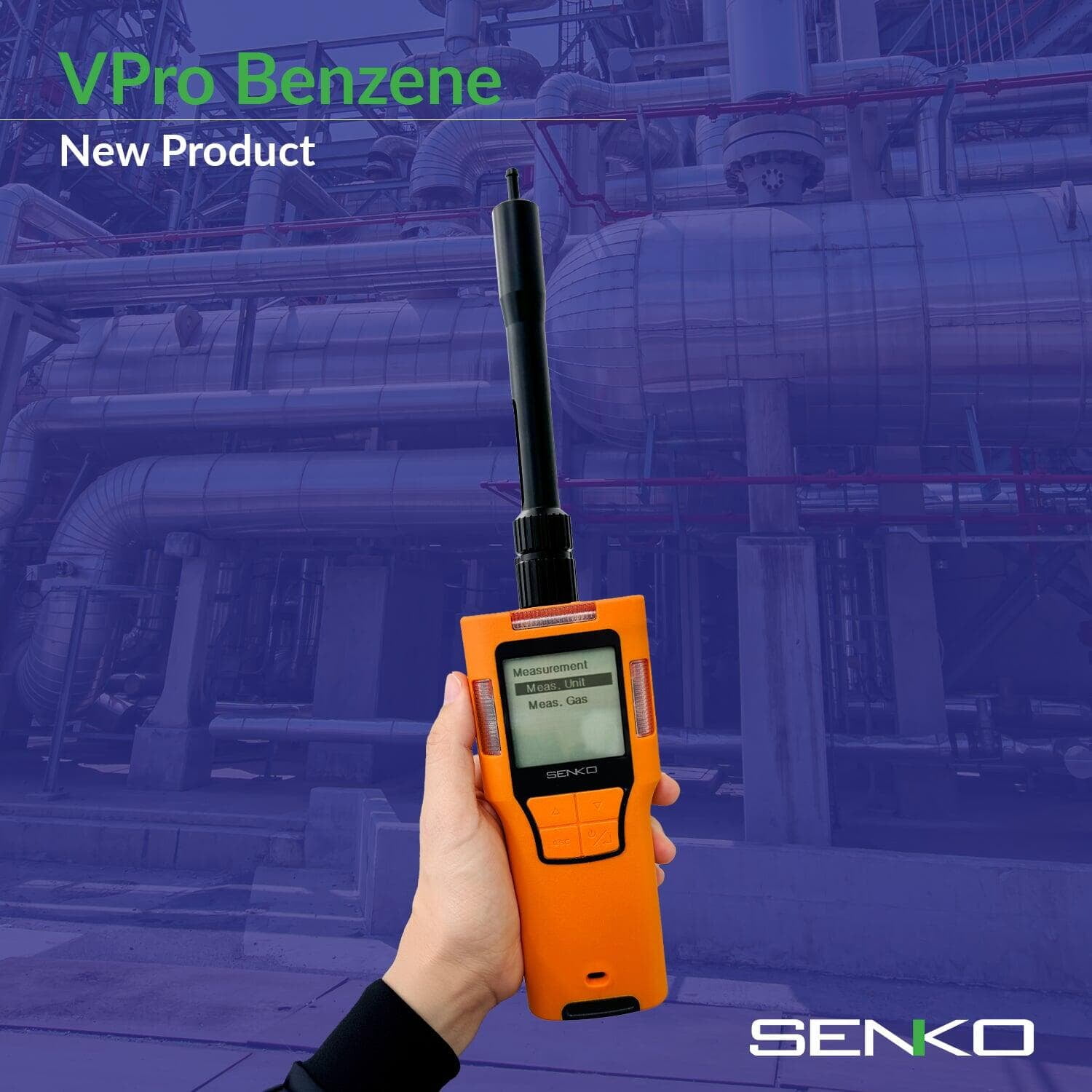
The VPro benzene is now available to purchase at Senko Europe. Check out our product page to find out more about this device, or alternatively, get in touch us at latest@senkoeurope.com.
Our Senko Europe partner network can also find all technical and pricing information on your partner portal. Please get in touch if you need a new log in.