
A Portable Gas Monitor Checklist for Power Substation Entries
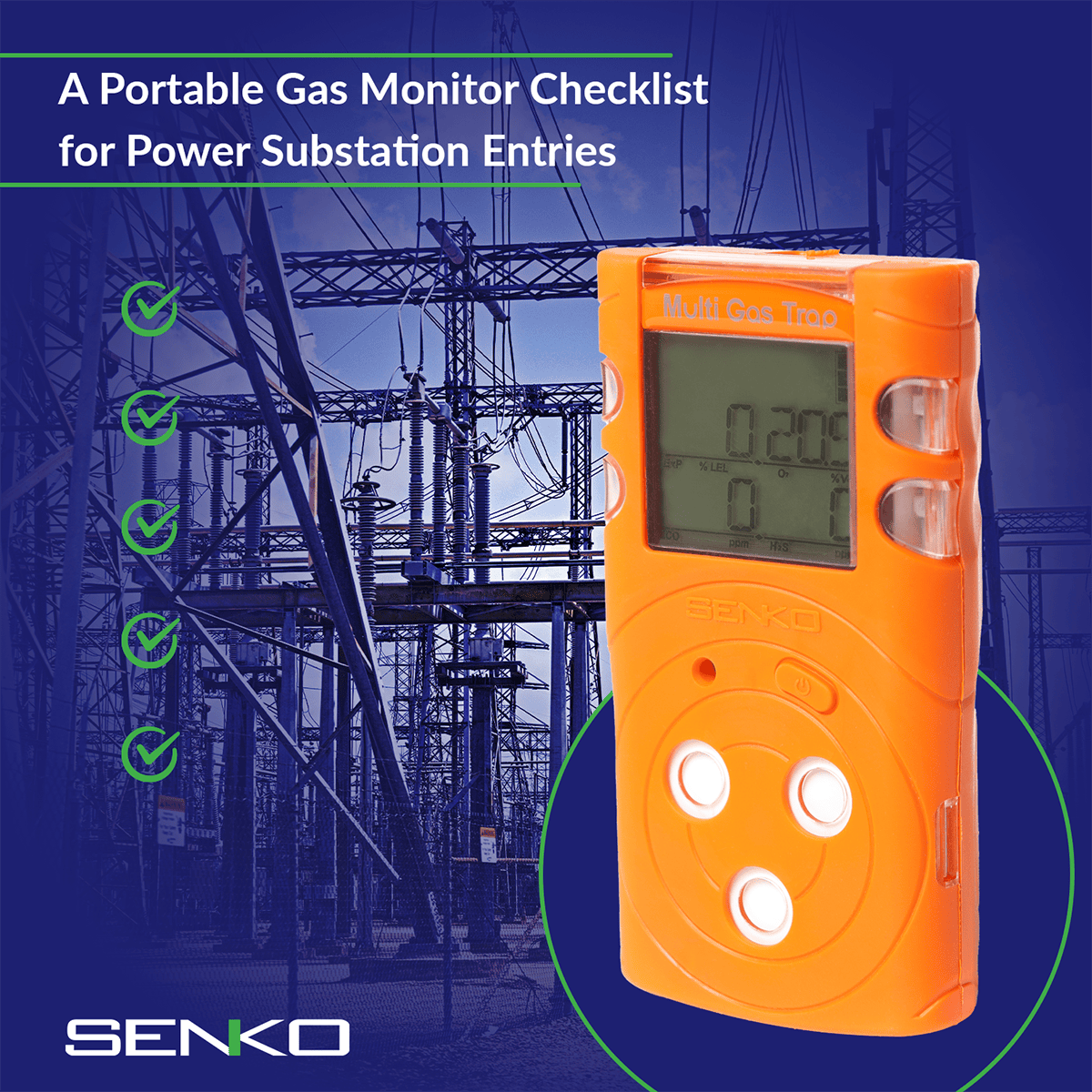
Electric power substations are built to handle extreme voltage, but the most dangerous hazards on-site are often invisible. For technicians entering cable basements, vaults, or battery rooms, atmospheric risks such as oxygen depletion, toxic gas accumulation, and combustible gas buildup can develop silently. These hazards demand the same discipline and procedural rigour as arc flash protection.
This guide outlines a portable gas monitor checklist tailored for electrical substations, helping technicians maintain compliance, operational integrity, and, most importantly, personal safety.
Recognising the Hidden Atmospheric Hazards
Unlike typical industrial settings, substations contain specialised gases that can create unique confined-space challenges. These include:
Sulfur Hexafluoride (SF₆): A non-toxic gas used for its insulating and arc-quenching properties in switchgear. However, it is five times heavier than air, so leaks can collect in trenches or basements, displacing oxygen and creating an asphyxiation hazard. SF₆ is also chemically inert and highly stable, which means it can persist in low-lying areas long after a leak occurs.
Hydrogen (H₂): Generated in lead-acid battery rooms during charging. Hydrogen is highly flammable, with an explosive range between 4–75% in air. Poor ventilation can turn a small leak into a severe explosion risk. Because hydrogen molecules are extremely light and diffuse rapidly, they tend to accumulate at ceiling height or under roof panels where stagnation zones form.
Carbon Monoxide (CO): Often produced by smouldering insulation or electrical faults. Colourless and odourless, CO binds to haemoglobin over 200 times more readily than oxygen, making even low concentrations potentially lethal. In confined or poorly ventilated substations, CO concentrations can rise quickly during cable overheating or small-scale fires. Its density is close to that of air, allowing uniform dispersion throughout the room, which complicates detection without properly calibrated electrochemical sensors.
Understanding these gases, and their physical behaviour, is the foundation of safe substation entry.
The Pre-Entry Portable Gas Monitor Checklist
A portable gas detector is only as reliable as the procedures that govern its use. Before every substation entry, perform the following five safety checks:
1. Conduct a Daily Bump Test
A bump test verifies that each sensor and alarm in your portable gas monitor responds correctly to a known gas concentration.
Action: Expose the monitor to calibration gas at the start of each day. If alarms do not activate within the manufacturer’s time limit, remove the unit from service and perform a full calibration.
2. Check Sensor Health and Calibration Dates
Electrochemical and catalytic sensors degrade over time due to exposure and drift.
Action: Inspect the calibration tag or device log. If the calibration interval (typically six months to one year) has expired, do not use the monitor for life-safety assessments.
3. Perform Remote Pre-Sampling
Basements, trenches, and vaults must be treated as confined spaces. Never enter an untested area.
4. Verify Battery and Power Status
Unplanned downtime in a high-risk environment is unacceptable.
Action: Fully charge your portable gas monitor before deployment. Devices such as the Senko SGT-P offer extended battery life, but always confirm that the power level will last through the entire shift.
5. Confirm Alarm Set-Points
Regulatory thresholds for gas concentration alarms vary by jurisdiction (e.g., OSHA, EH&S).
Action: Ensure your portable gas monitor’s alarm points match the local exposure limits, for instance, the low oxygen alarm should typically activate below 19.5% O₂.
On-Site Monitoring Best Practices
Once on site, conditions can change rapidly. Continuous vigilance is, therefore, essential. Before beginning work, confirm that all entry personnel understand alarm signals and emergency egress routes. When opening enclosures or switching panels, stand clear of vent paths where trapped gases may be released.
Monitor Placement: Wear your portable gas monitor within 30 cm of the breathing zone (near the mouth and nose). Belt-clipping can cause delayed detection if hazardous gases rise or sink. Always check the flow of air around you; if ventilation fans or drafts are present, orient the monitor into the prevailing airflow for the most accurate reading.
Continuous Operation: Keep your portable gas monitor on at all times while in the area. Gas levels can fluctuate within minutes, especially near switchgear, trenches, or battery banks. Recheck readings when opening doors or hatches, as sudden air movement may stir up trapped gases. Carry a spare battery or secondary unit for extended maintenance operations.
Data Logging: Enable automatic data recording. This information helps safety teams trace leaks, verify alarm events, and improve long-term hazard control. Review the logged data at shift’s end to confirm exposure trends and ensure any transient spikes are investigated promptly by the HSE or maintenance team.
Fostering a Culture of Gas Safety
Electrical technicians are trained to respect visible risks like high voltage, arcing, and thermal burns. Yet atmospheric hazards can be equally deadly. Embedding routine gas monitoring into every substation entry is not just compliance, it’s culture.
At Senko Europe, we design durable, high-reliability portable gas monitors such as the MGT Multi-Gas Monitor, suitable for the high-EMI environments of modern substations. The MGT combines precision electrochemical sensors and catalytic bead technology within a rugged, IP67-rated enclosure, ensuring accuracy even under electromagnetic interference or fluctuating humidity. Its fast response time make it ideal for remote sampling in cable trenches or vaults, while the large, backlit display allows real-time visibility in low-light environments. When combined with procedural discipline and routine testing, the MGT delivers dependable detection and data integrity, serving as the frontline defence against unseen threats.