
Key features of personal VOC monitors for contamination mapping
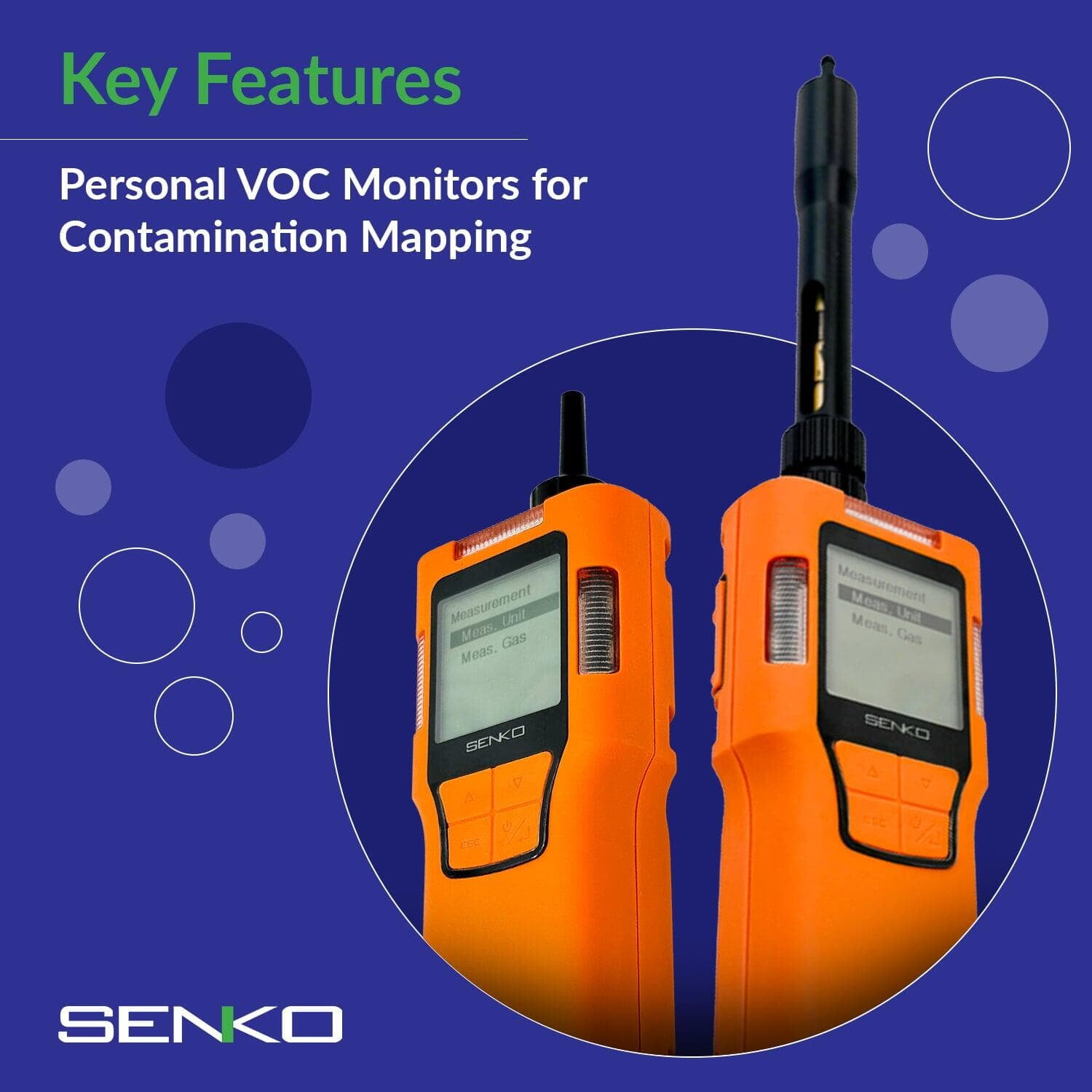
Contamination mapping plays a central role in modern industrial hygiene and environmental risk assessment. Rather than providing a single snapshot, mapping builds a spatial and temporal picture of volatile organic compound (VOC) concentrations across a site. This data is used to determine whether organic contaminants present a risk of significant harm to human health or the environment and to inform long-term remediation or control strategies.
For technical teams, this task demands more than basic gas detection. Personal VOC monitors must deliver high-resolution, defensible data that supports modelling, regulatory assessment, and operational decision-making. The following key features define whether a personal VOC monitor is fit for effective contamination mapping in real-world conditions.
Advanced datalogging and live data feeds
At the core of contamination mapping is correlation. Concentration data only becomes meaningful when it can be tied to specific times, locations, and activities across a site.
Continuous recordkeeping
Personal VOC monitors used for mapping should include internal dataloggers capable of storing extended datasets. Industrial-grade devices can typically record up to 100 hours of continuous readings, which can later be downloaded to a PC for detailed analysis.
This continuous record allows teams to:
Identify persistent contamination zones
Detect short-term spikes linked to specific tasks or locations
Build trend profiles rather than relying on isolated measurements
Such datasets form the foundation for risk-based modelling and defensible reporting.
Real-time connectivity
Wireless connectivity adds another layer of protection. Live data feeds enable safety attendants or remote supervisors to observe atmospheric changes as they occur. If VOC concentrations approach or exceed permissible exposure limits (PELs), intervention can happen immediately.
For complex sites, real-time oversight also helps coordinate multiple personnel conducting mapping simultaneously, ensuring consistent coverage and rapid response.
Sensitivity to indicator compounds
VOCs encountered during contamination mapping are rarely single chemicals. Petroleum hydrocarbons, in particular, exist as complex mixtures that behave differently depending on volatility, molecular weight, and toxicity.
Benzene specificity
Benzene remains one of the most critical indicator compounds in contamination assessment. As a high-risk hydrocarbon vapour, its presence is often used to refine exposure estimates and health risk calculations.
Personal VOC monitors that can quantify or reliably indicate benzene-equivalent responses provide more precise inputs for developing an accurate conceptual site model (CSM). This level of specificity strengthens decisions around access control, remediation urgency, and long-term monitoring requirements.
Fraction-based assessment
Advanced sensors can also help differentiate between petroleum hydrocarbon fractions. This capability is essential when screening results against Generic Assessment Criteria (GAC) for human health.
Distinguishing lighter, more volatile fractions from heavier, persistent ones allows technical teams to assess not just immediate exposure risk, but also the likelihood of long-term environmental impact.
Rapid sensor response time
Contamination mapping is inherently dynamic. Personnel move continuously through different zones, elevations, and micro-environments, and VOC concentrations can change sharply over very short distances.
Low sensor lag
A key performance metric is sensor response time. Monitors with excessive lag may fail to reflect the true concentration at the worker’s current location, particularly when moving quickly through a site.
Low-latency sensors ensure that readings align with the user’s direction of travel, providing an accurate spatial profile rather than a delayed average.
Identifying point sources
High-speed response becomes especially important near point sources. VOCs may enter an excavation through cracks in rock, joints in concrete, or penetrations in containment systems. Concentrations can shift from near-saturation to background levels within a few metres.
Only sensors with rapid uptake and recovery can capture these gradients accurately, allowing teams to pinpoint ingress points rather than broadly classifying an area as contaminated.
Rugged portability and ease of use
Mapping activities often take place in physically demanding environments such as utility tunnels, ship hulls, landfill sites, or brownfield developments. Personal monitors must therefore balance performance with practicality.
Compact, durable design
Portable VOC detectors designed for personal wear need to be robust enough to withstand vibration, dust, and variable weather while remaining compact and unobtrusive. Smaller form factors allow continuous monitoring without restricting movement or interfering with other personal protective equipment.
This portability ensures that data collection remains consistent across the entire mapping exercise rather than being limited to short sampling intervals.
Simplified user interface
During mapping, attention must remain on navigation, safety, and observation, not device management. Clear displays, tactile buttons, and intuitive menus reduce the cognitive load on operators.
A simplified interface also lowers the risk of user error, helping ensure that datasets remain clean and reliable throughout extended surveys.
Compliance and data integrity
Contamination mapping data is often scrutinised well beyond the initial survey team. Regulators, environmental consultants, and site owners rely on this information to make long-term decisions.
Alignment with assessment frameworks
Exportable data formats are essential. VOC monitor outputs should integrate easily with established assessment methodologies, such as the Wilson and Card methodology (CIRIA C665), which is widely used to classify ground gas risks.
Seamless data transfer supports transparent reporting and reduces the risk of transcription or interpretation errors.
Calibration reliability
Data integrity depends on sensor accuracy. Efficient field calibration routines allow teams to verify performance regularly without disrupting the mapping programme. Consistent calibration ensures that readings remain comparable across different days, locations, and personnel.
This reliability is particularly important when datasets are used for geotechnical modelling or long-term environmental management strategies.
Moving from detection to mapping
Personal VOC monitors designed with these features enable a shift from simple atmospheric checks to structured contamination mapping. Instead of asking whether VOCs are present, technical teams can determine where contaminants are concentrated, how they migrate, and whether they pose a sustained risk.
By combining advanced datalogging, indicator sensitivity, rapid response, and robust data handling, modern personal VOC monitors, such as those within the SENKO portable detector range, support evidence-based decisions that stand up to operational and regulatory scrutiny.
In contamination mapping, detail matters. The right monitoring features transform raw readings into actionable insight, ensuring that site safety strategies are built on accurate, defensible data.
Find out more
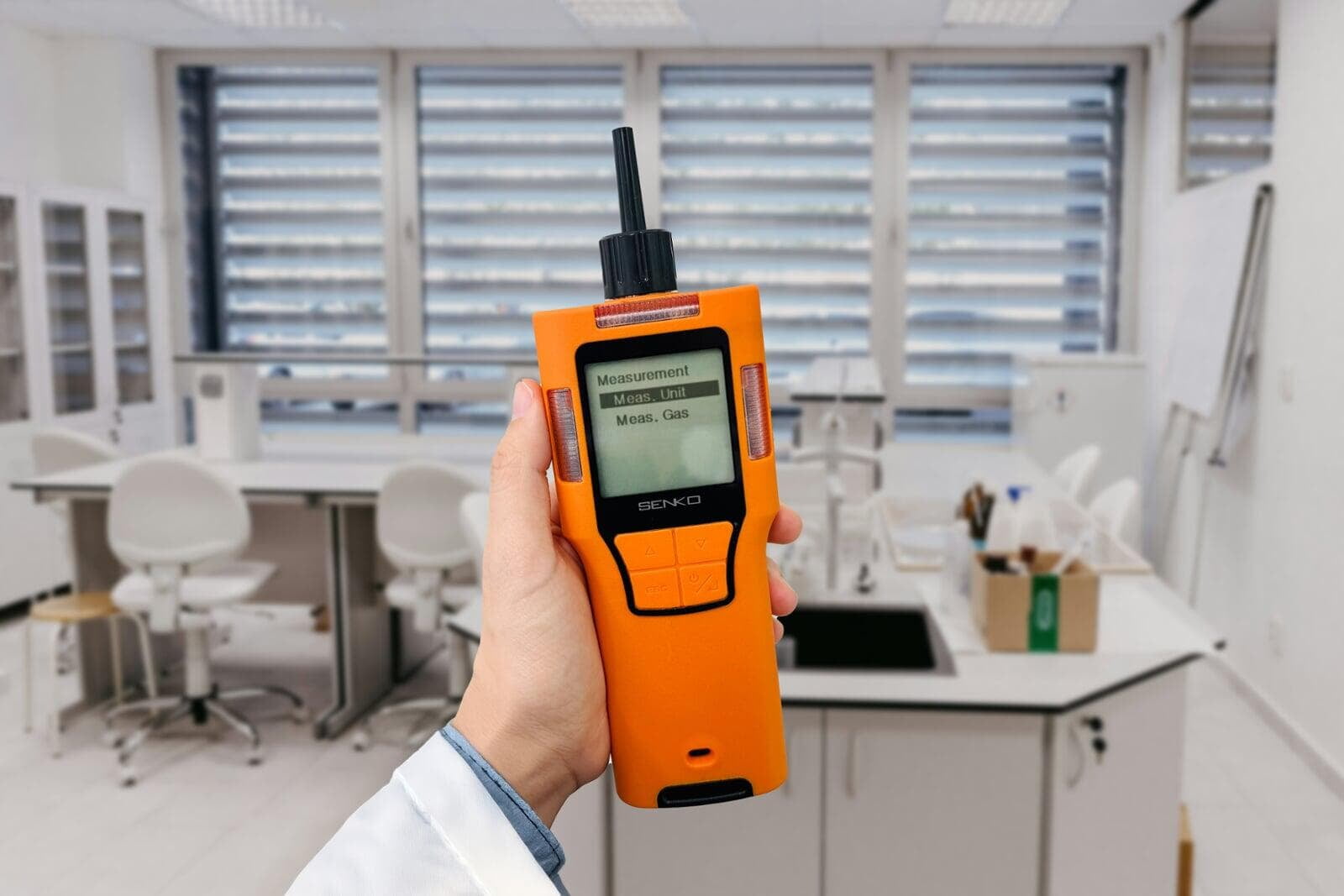
Both Benzene specifc and standard personal VOC monitors are now available at Senko Europe. Get in touch with us or, if you are a member of our partner network, log in to your partner portal for more information,