
Finding solutions for portable multi gas monitoring in the water industry
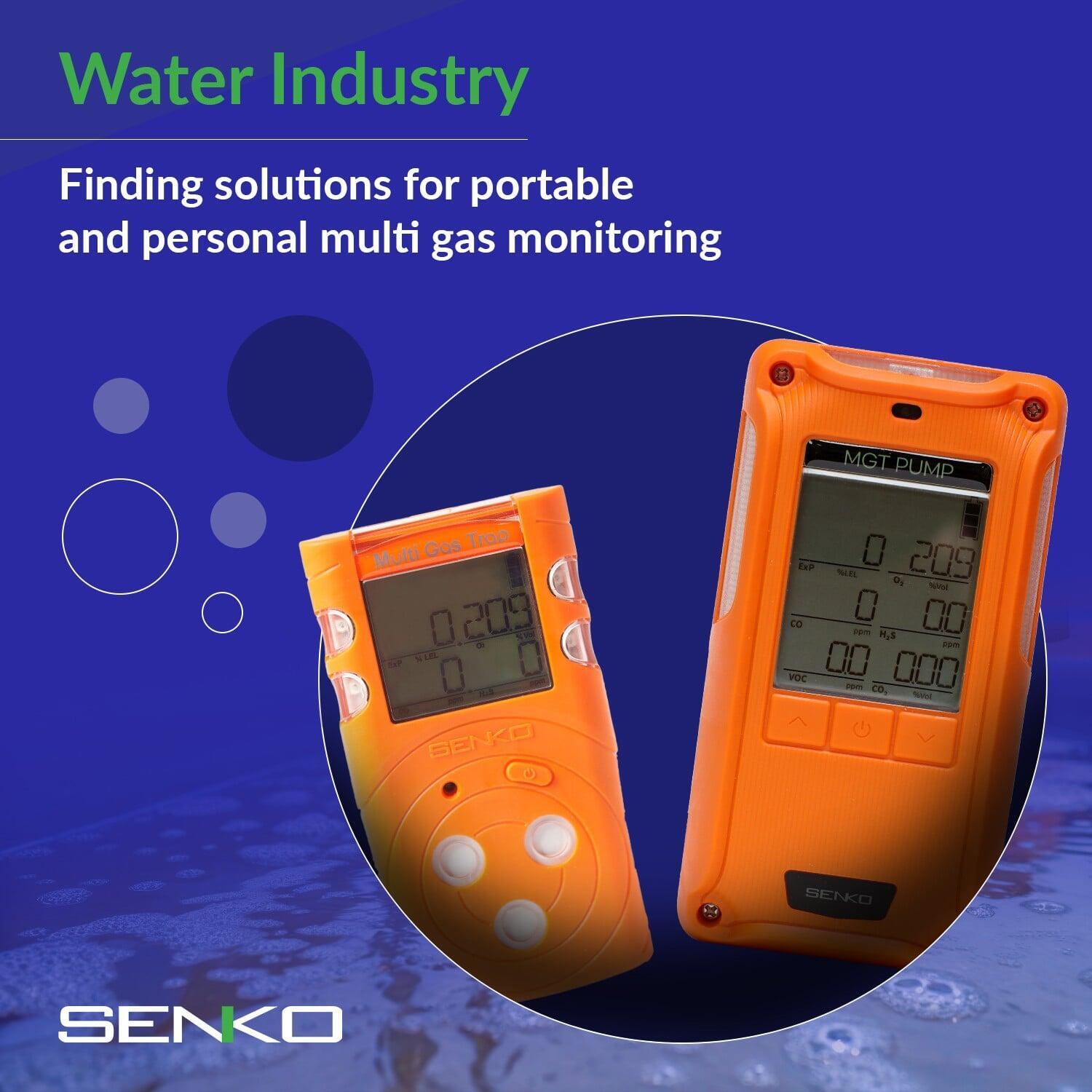
Air quality in water and wastewater sites is shaped by processes such as sludge breakdown, anaerobic digestion, and chemical dosing, each of which can drive shifts in gas levels. Gases such as hydrogen sulphide, methane, and carbon monoxide may fluctuate throughout the day, and oxygen levels can shift in areas with limited ventilation. As operators, maintenance teams, and confined-space entry crews work across open tanks, service corridors, pumping stations, and enclosed chambers, they will encounter atmospheric conditions that rarely stay constant. Although fixed gas detection is vital for monitoring key process areas where gases are known to form, it cannot track the changing conditions across every workspace. Portable multi gas monitoring bridges this gap, ensuring personnel remain protected as their working locations change.
Selecting the correct portable multi gas monitoring solution
1. Identify site specific hazards and risk zones
A suitable monitoring programme in the water and wastewater sector begins with a detailed review of the facility. Different parts of a treatment plant present varying hazards. For instance:
Sludge processing areas can release sharp increases in hydrogen sulphide
Enclosed pumping stations or pipe galleries can experience the accumulation of methane pockets
Chemical dosing areas can contain chlorine or ammonia.
Humidity, temperature swings, and corrosive vapours can influence sensor performance and the reliability of portable instruments. Mapping all zones, understanding how gases might form, and noting how conditions change during operations or maintenance tasks guides the choice of the right portable multi gas monitors.
2. Clarify the need for portable devices
Portable multi gas monitors are designed to deliver continuous personal protection as personnel move through different operational areas, tracking changes in atmospheric conditions as work progresses. The continuous monitoring function applies to both pumped and non-pumped instruments, ensuring workers remain protected wherever they are operating across a site.
Pre-entry atmosphere checking forms an additional layer of protection within this broader monitoring role and is supported by both pumped and non-pumped portable multi gas monitors. Non-pumped portable gas monitors enable immediate readings at the point of entry, while pump-driven portable multi gas monitors extend this capability by allowing remote sampling of enclosed or hard-to-reach space before entry. Once work begins, both device types continue monitoring in real-time, alerting personnel if conditions change.
The choice between pumped and non-pumped portable multi gas monitors therefore depends on how and where atmospheric risks present themselves. Many water industry facilities use both approaches together, combining continuous personal monitoring with flexible pre-entry assessment to maintain protection across routine tasks, confined spaces, and variable process areas.
3. Decide the correct sensor configuration
Most facilities begin with four-gas monitoring, typically covering oxygen, hydrogen sulphide, carbon monoxide, and flammable gases expressed as a percentage of the lower explosive limit. Some water industry sites also require chlorine, sulphur dioxide, or nitrogen dioxide sensors depending on their treatment processes.
Choosing the right sensor technology is equally important:
Electrochemical sensors- offer precise detection of many toxic gases.
Catalytic pellistors- respond quickly to flammables.
Infrared sensors- perform reliably in high humidity or methane-rich conditions where other sensors might struggle.
By using these sensor options together, monitors can remain effective across diverse conditions encountered in the water industry.
4. Assess environmental suitability and user experience
Water and wastewater environments demand equipment that can withstand challenging conditions. Splashing, humidity, corrosive vapours, and temperature shifts can all affect performance. Portable multi gas monitors should therefore offer rugged housings and ingress protection ratings that match the settings.
Beyond durability, the monitor must also remain practical for daily use. Clear displays, straightforward controls, and highly visible alarms help personnel interpret readings quickly. In noisy process halls, vibration alarms can ensure alerts are still recognised. Battery performance is another essential consideration, particularly for remote areas or extended confined-space entries where charging opportunities are limited and sustained operation is required.
5. Integrate monitoring with procedures and training
Gas detection works best when it supports existing site procedures. Portable devices should reinforce water industry permit-to-work systems, confined-space entry processes, and emergency plans. Training ensures personnel recognise alarms and respond effectively. When teams comprehend both the equipment and the associated procedures, monitoring becomes embedded in routine practice rather than an isolated task. This alignment generates a consistent level of protection across the entire treatment facility and strengthens overall site safety.
Senko Europe solutions for portable multi gas monitoring in the water industry
MGT P Four Gas Monitor
The MGT P Four Gas Monitor provides continuous personal protection for water industry tasks, measuring oxygen, hydrogen sulphide, carbon monoxide, and flammable gases. Its lightweight design, long-lasting battery, and ATEX approval make it suitable for routine work around tanks, galleries, and pumping stations.
MGT Pump
The MGT Pump supports both pre-entry assessment and continuous in-entry monitoring within confined spaces such as wet wells and valve chambers, reinforcing portable multi gas monitoring where atmospheric conditions may change during work. In addition to standard four-gas configurations, it can be equipped with optical chlorine (CL2) and ammonia (NH3) sensors, reflecting the hazards associated with chemical dosing and treatment processes in water and wastewater facilities.
Supporting for up to six gases and 37 sensor combinations, including infrared, catalytic pellistor, photoionisation, and dual toxic sensors, the MGT Pump provides flexible, reliable sampling of tanks and enclosed structures before entry and continued monitoring once work is underway.