
Disposable Gas Detectors: Pros, Cons and Use Cases in Field Work
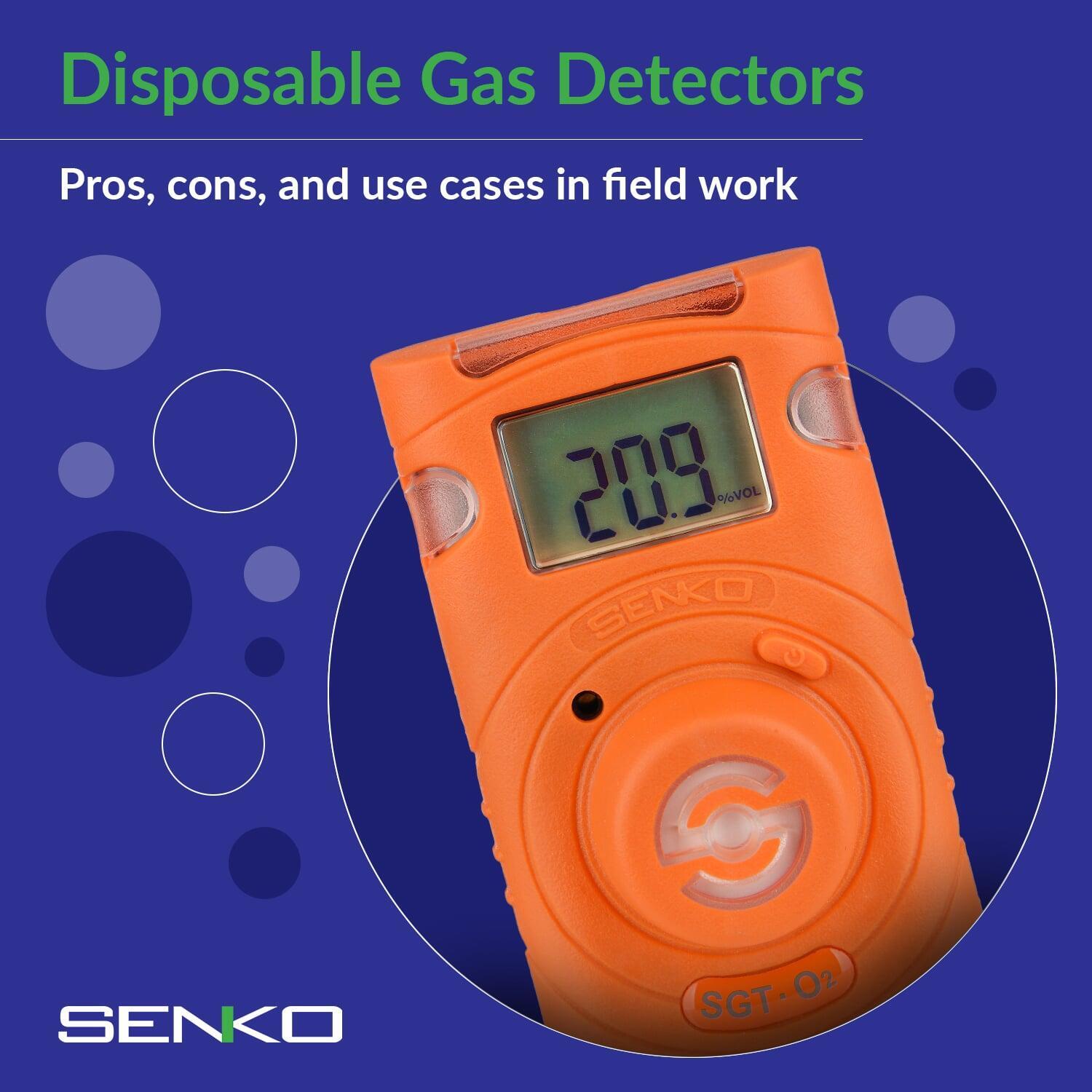
Field work frequently involves environments where conditions shift quickly and hazards can be difficult to predict, so teams rely on equipment that maintains safety and efficiency with minimal intervention. Disposable gas detectors, compact single-gas monitors with fixed lifespans, are built for this type of demand and are a trusted choice for professionals who need dependable personal protection.
Designed for continuous operation, disposable gas detectors require no sensor changes or battery replacements and only need minimal training for effective use. They offer round-the-clock protection without the complexity of traditional serviceable instruments for technicians, contractors, and maintenance teams working across multiple sites. Their simplicity and reliability make them well suited to many field tasks, but understanding where they perform best, and when more advanced systems may be required, remains essential for effective gas safety.
What Are Disposable Gas Detectors?
A disposable gas detector is a sealed personal monitor that detects a specific gas, such as hydrogen sulfide (H₂S), carbon monoxide (CO), sulfur dioxide (SO₂), or oxygen (O₂). Unlike reusable instruments, disposable gas detectors have no replaceable parts. When their lifespan ends, usually after two years, they are replaced entirely.
Each disposable gas detector is pre-calibrated and provides visual, audible, or vibrating alarms if gas levels exceed safe limits. Lightweight and compact, they clip close to the breathing zone, allowing accurate measurement of the air the worker inhales. In practice, this gives workers continuous, unobtrusive protection against elevated or unexpected gas concentrations throughout the day.
Advantages
Disposable gas detectors are built for field practicality. Their ease of deployment and consistent performance make them useful for teams working in sectors ranging from utilities to oil and gas.
1. Minimal upkeep: A factory-sealed design eliminates routine tasks like calibration, battery replacement, and sensor changes. Such a level of simplicity is especially valuable for remote projects or in locations with limited support.
2. Simple to use: As disposable gas detectors use one-button operation and built-in self-checks, they require minimal training and can be used confidently by both new and temporary staff.
3. Cost-effective for known hazards: When only one gas poses a risk, disposable gas detectors deliver focused protection at a lower cost than multi-gas instruments. They can also be issued individually, improving accountability and reducing equipment sharing.
4. Lightweight and wearable: Small and unobtrusive, disposable gas detectors can be clipped to clothing or PPE without restricting movement. Their portability supports consistent personal monitoring, ensuring workers stay aware of changing gas conditions.
5. Predictable service life: Built-in countdown timers or indicators on disposable gas detectors show remaining operational days, helping managers plan replacements and avoid downtime.
Considerations
Although disposable gas detectors offer clear benefits, they are also subject to certain limitations.
1. Single-gas focus: Each disposable gas detector monitors a single gas. Should a work area contain more than one potential hazard, for example, flammable vapours as well as the risk of low oxygen, a multi-gas or fixed detection system is needed to provide full coverage.
2. Fixed lifespan: Most disposable gas detectors operate for only about two years, which means they must be replaced on schedule to avoid gaps in protection.
3. Verification still required: Despite their maintenance-free design, disposable gas detectors must still undergo daily or weekly bump tests, which adds a recurring task for teams in the field.
4. Environmental responsibility: Replacing the whole device generates additional disposal and recycling requirements, which organisations must manage to avoid unnecessary environmental impact.
5. Limited Coverage: Because disposable gas detectors monitor a single gas and have a narrow detection scope, they cannot provide full site coverage.
Common Field Use Cases
Disposable gas detectors work well in applications that demand mobility, dependable performance, and rapid deployment.
Short-term or project-based work: A strong fit for temporary shutdowns, maintenance work, or turnaround projects, disposable gas detectors allow teams to be equipped quickly without the need for servicing or recalibration.
Known single-gas environments: When one hazard is clearly identified, such as carbon monoxide in boiler rooms, hydrogen sulfide near wellheads, or oxygen depletion in tanks, disposable gas detectors provide reliable, focused protection.
Mobile or distributed teams: Crews working across multiple sites benefit from lightweight units that travel easily and require no base station.
Remote or temporary sites: Disposable gas detectors are effective for field teams operating without power or calibration facilities, such as utility maintenance or environmental monitoring, because they run continuously and require no external equipment or routine servicing.

Trusted Gas Detection with the SGT Disposable Personal Monitor
Senko Europe’s SGT Disposable Personal Monitor delivers reliable protection against single-gas hazards including hydrogen sulfide, carbon monoxide, sulfur dioxide, and oxygen. In addition to addressing the most common industrial risks, our SGT range includes sensing options that are not typically supported by disposable single-gas instruments. Senko Europe is currently one of the only gas detection manufacturers offering disposable single-gas monitors for hydrogen (H2), nitrogen dioxide (NO2), and ammonia (NH3), a capability that makes our products uniquely positioned to address environments with less common or harder-to-monitor hazards. Designed for continuous operation for up to two years, the SGT combines clear alarm signalling, automatic self-checking, and a robust construction that meets ATEX requirements to support safe use across dangerous or explosive environments. It is compact, reliable, and easy to use, helping workers stay safe wherever they need to operate. To learn more about how Senko Europe can contribute to your gas detection practices, visit our website or contact our team today.